
•
Content Marketing
Content Works: What helped this award-winning B2B content campaign generate big impact?
How do you turn a province’s recycling problems into a personal challenge?
In today’s hyper competitive B2C and B2B world, multi-market brands face the combined challenge of maintaining a consistent identity while connecting with diverse local audiences in an authentic way. Programmatic advertising for multi-location businesses is a powerful way to scale campaigns to meet big organizational objectives and specific local goals.
Research shows that consistent branding can increase revenue by up to 20 per cent. But when your brand has multiple locations and touchpoints across those locations, it can be difficult to create compelling messages that are both consistent and customized to meet the needs of your target audience.
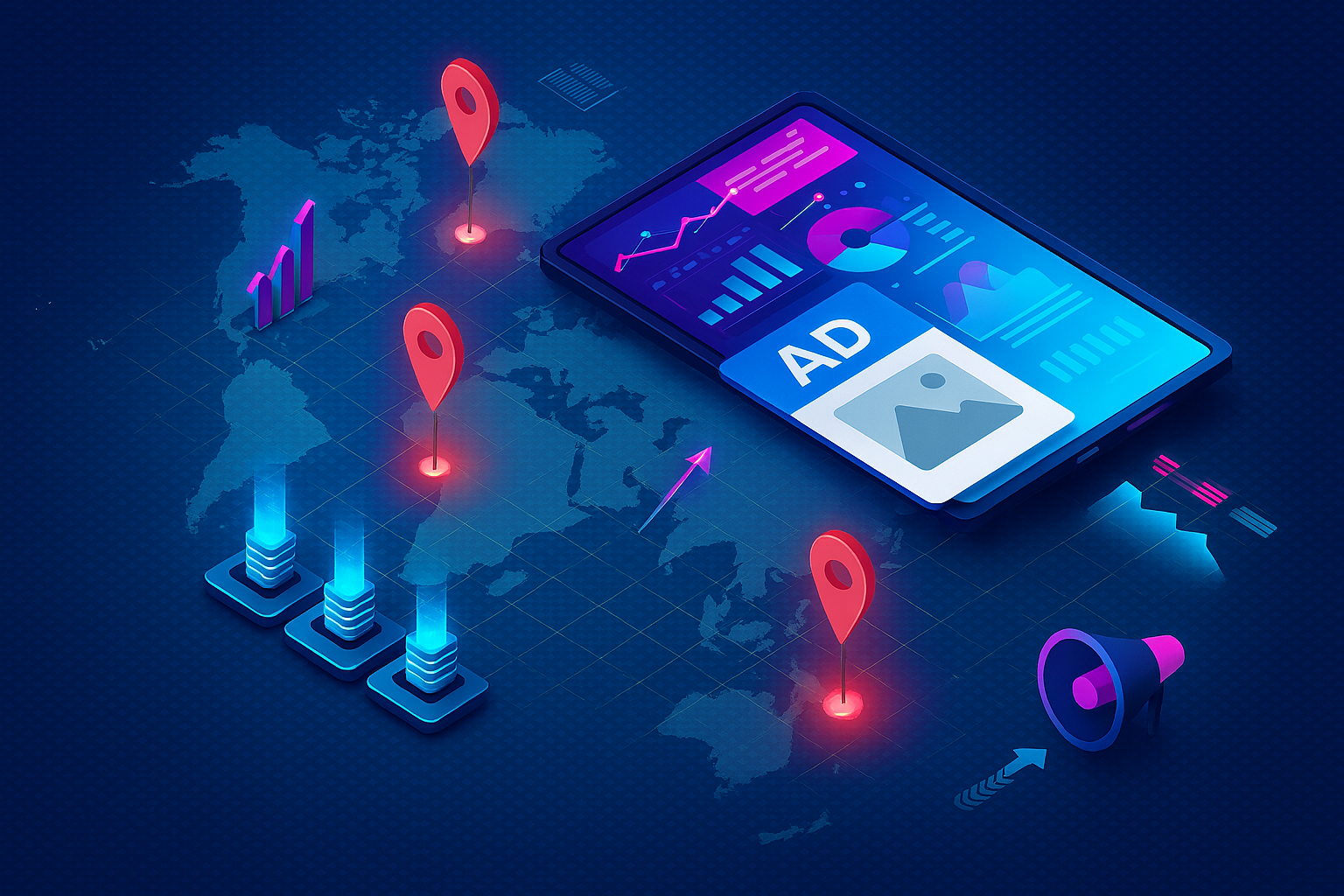
That’s where programmatic advertising can be a game changer. Programmatic advertising for multi-location businesses shows highly targeted ads to the right audience at the right time at the right touchpoints, supercharging marketing efforts. It offers a powerful way to influence and engage high-intent shoppers, and reinforce and scale online and offline campaigns to meet big organizational objectives and specific local goals.
For brands with multiple locations – both physical and/or digital – programmatic advertising is a critical component of a successful multi-location ad strategy.
In today’s hyper competitive B2C and B2B world, multi-location brands face the combined challenge of maintaining a consistent identity while connecting with diverse local audiences in an authentic way.
Programmatic advertising is the fully automated, data-driven, real-time buying and selling of digital ad space across multiple websites and networks using artificial intelligence (AI) and real-time bidding.
Programmatic advertising for multi-location businesses combines corporate branding with local tactics – such as precision targeting and geofencing – to deliver highly targeted, personalized, localized ads across numerous channels in real time while maintaining unified brand messaging. It can support multi-market campaigns with live, data-based optimization and dynamic creative optimization.
Importantly, programmatic advertising can do all this while ensuring consistent messaging and audience targeting across platforms.
The result: programmatic advertising for multi-location brands improves efficiency and return on investment (ROI) by targeting high-intent audiences when they are most likely to make a purchase, improving online and in-store engagement and boosting budget efficiency.
How do you make sure your ads work in all your locations when your business operates in multiple markets, each with their own unique identity, competitors and consumer demographics?
The challenge becomes more complex when you factor in the need to identify and align location-specific key performance indicators (KPIs) and data collection methodologies. While it is important to acknowledge that what works in one region might not work in another and allow for differences, without alignment it is difficult to accurately attribute impact to specific campaigns, integrate data and balance overall corporate marketing goals with local needs.
Other common challenges include:
Programmatic advertising for multi-location businesses is the equalizer. By employing a hybrid approach that combines national reach with local precision, programmatic advertising can run simultaneous national campaigns designed to build and reinforce brand visibility, recognition and identity, and local campaigns designed to drive traffic, engagement and conversions in specific locations.
One of the biggest benefits of programmatic advertising for multi-location businesses is the access it provides to centralized reporting, and detailed analytics and metrics – such as impressions, clicks, conversions, foot traffic and revenue attribution – from all locations. This level of transparency and actionable audience and campaign insights allow brands to optimize their creative, budgets and bidding strategies to maximize impact.
Tracking performance by location is essential to create an accurate, holistic view of performance and to maximize ROI across all locations.
Impressions measure visibility and reach. They are the total number of times during a campaign that an advertisement appears on a user’s screen.
Click-through rates measure the percentage of people who click an ad after they see it. Monitoring click-through rates from local search results and share of local search visibility compared to competitors will help determine the relevance of your ad with your target audience by location.
Cost per click is the amount you paid for each click. It is important for managing budgets and measuring ROI.
Cost per lead measures the cost to acquire a potential customer’s interest. It will help you see what’s working and what’s not across channels, allowing you to direct funds to the channels providing the best ROI.
Conversion rate by channel measures the percentage of users on a specific channel who completed a desired action.
Customer acquisition cost (CAC) by location. Understanding the cost to acquire a customer in each location will help you set more accurate performance targets for each market you’re in. There are several components to CAC at the location level. They include local trends, total cost per acquisition and cost by channel, CAC to lifetime value ratio and lead to customer conversion rates in that location.
Foot traffic attribution tracks users who saw your ads online encouraging them to visit a physical store and did. Programmatic platforms offer tools to measure this.
Marketing-attributed revenue connects the sales (online and in-store) resulting from specific marketing campaigns and channels. Integrating your programmatic advertising platform with your customer relationship management and point-of-sale systems will enable closed-loop ROI tracking.
Return on ad spend (ROAS) and ROI. ROAS measures the revenue and cost of ads while ROI measures overall profitability of ad campaigns by comparing the revenue generated with the total cost to produce and deliver ads.
Customer lifetime value (CLV) forecasts the total net revenue a customer generates over the entire relationship. When combined with ROAS and cost per acquisition or lead, CLV provides insight into long-term profitability.
Other critical local conversion metrics to monitor include location landing page conversion rates, phone call volume and quality from each individual digital channel, click-for-location actions, and offer redemption rates at individual stores.
Multi-location advertising can be overwhelming. Leveraging the experience of a trusted media partner can help you design and implement a comprehensive programmatic advertising strategy designed to maximize campaign impact across locations while reinforcing your brand identity.